
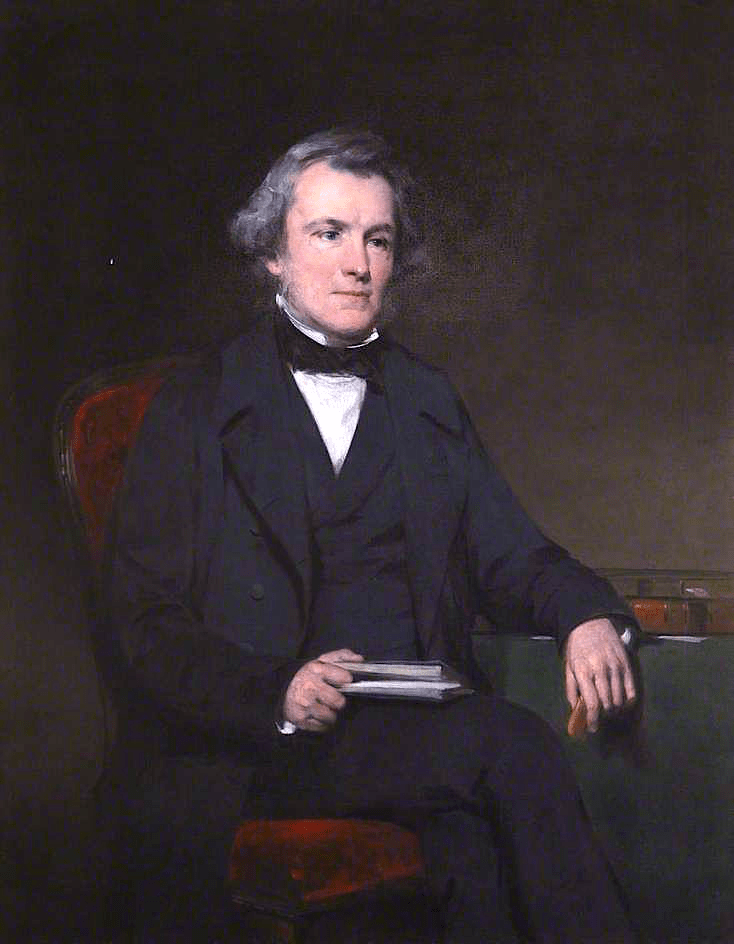
I came across an interesting passage in the Introduction to John Laird’s (1920) A Study in Realism:

Note footnote 3.
Thomas Reid (1710 – 96) was, of course, the great Scottish proponent of realism and common sense. According to Victor Cousin, his philosophy became the conventional wisdom in Scottish philosophy, everywhere except St Andrews. St Andrews escaped the dogma because of the presence of one figure: James Frederick Ferrier (1808 – 1864).
Ferrier was an idealist–one of the first of the “British Idealists”–who argued strenuously against Reid’s realism and the other forms of realism that grew from it. He insisted that the objects of knowledge have no independent existence without the knowing subject and that “the whole material universe by itself” is unknowable and, as a result, nonexistent. Nobody pushed harder against the dominant strains towards realism, positivism, empiricism, and materialism that characterised his era.
His great work, Institutes of Metaphysic, is rationalistic in method–it aims to prove a whole philosophical system a priori–and idealistic in conclusion. It is, in other words, entirely out of step with the prevailing dogmas of his day–and with ours, since our day shares the same dogmas.
The problem with orthodoxy is that it gets boring. There are only so many times you can listen to votaries trading the same shibboleths with minor variations. Ferrier in his day made philosophy at St Andrews a haven from the prevailing yawn that was beginning to engulf the rest of Scottish philosophy. It’s a nice legacy, I think, to want to preserve.
You can read about Ferrier in Elizabeth Haldane’s biography (Haldane is a fascinating figure in her own right).

 Alexander Douglas